

Hi, I’m Kayla Sox. I run marketing for a mid-size metal fab shop near Toledo. We make brackets, small weldments, and custom parts for HVAC and ag. I spend a lot of time with oily gloves in my bag and a laptop that smells like coolant. So yeah, I care about how a site works on the shop floor and for buyers at their desk.
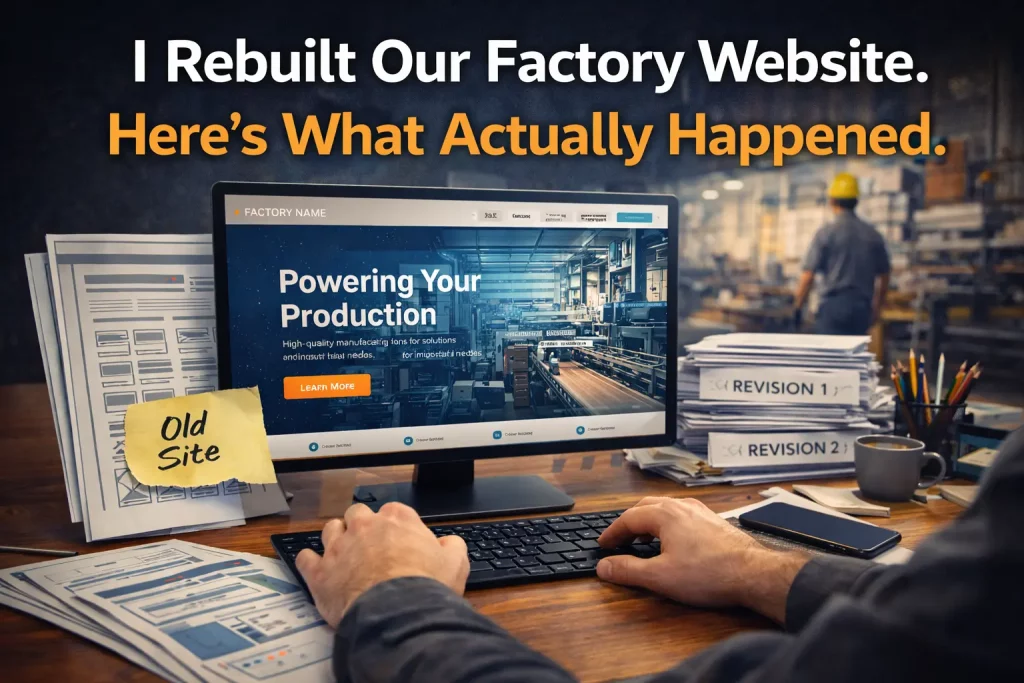
Last winter, I led a full rebuild of our manufacturing website. I’ll tell you what worked, what face-planted, and what I’d do again.
Why I Even Touched It
Our old site was a dusty brochure. Slow. Out of date. Folks kept calling the main line to ask for basic stuff:
- “Where’s the PDF spec sheet?”
- “How do I send a BOM?”
- “Do you do 5052 or 6061?”
- “Can I get a 3D model?”
And our “Request a Quote” form? It sent emails into a black hole. Sometimes it was me. Sometimes it was an inbox named “sales@” that no one checked. I’m not proud of that.
You know what? Enough was enough.
What We Decided To Build
I wrote a short, simple brief. It fit on one page. It had seven goals:
- A clean RFQ form with BOM upload
- A real part catalog with specs and filters
- CAD downloads (STEP and IGES)
- A distributor locator
- Careers page with easy apply
- Speed under two seconds
- Clear proof: ISO badge, case studies, and plant photos
We kept the stack simple. WordPress on WP Engine. Gravity Forms for RFQs. Algolia for search and filters. WooCommerce for spare parts (not custom jobs). HubSpot for CRM. Cloudflare for speed and bot stuff. CAD files came from TraceParts and CADENAS embeds. We used Yoast for SEO. Nothing wild. Just solid tools.
One interesting rabbit hole I went down while studying how users sort through big, unstructured lists was Craigslist. Its personals section might be a world away from industrial brackets, but the way people rely on terse headlines, location tags, and safety cues is still a masterclass in conversion design. This best Craigslist for sex apps compilation breaks down which mobile tools nail search, filtering, and trust signals—insights you can absolutely steal when you’re tuning your own on-site search or RFQ flow. Likewise, I looked at how niche review platforms structure city-specific pages. The detailed tagging on the Rubmaps Laredo breakdown offers a live case study in concise layouts, faceted search, and trust-building cues that you can borrow when deciding how to surface specs, reviews, or distributor info on your own industrial pages.
For anyone mapping out a similar overhaul, this comprehensive guide on best practices for manufacturing website design lays out a step-by-step playbook on UX, speed, and conversion tactics that translate well to the shop floor.
Real Pages, Real Changes
Here’s what we actually shipped:
-
RFQ page: fields for material, finish, tolerance, qty, due date, and a box for “notes from the shop.” You can attach a BOM or a print. It pings HubSpot and sends a Slack alert to sales. No more black hole.
-
Catalog: 486 SKUs to start. Filters for material (CRS, 304, 316), finish (powder, zinc), hole size, and thickness. Algolia makes the search feel fast. Like, “type and it shows” fast.
-
CAD: Simple tabs with STEP, IGES, and a 3D viewer using Sketchfab embeds for the top sellers. Engineers love that part. I do too.
-
Distributor locator: Google Map with zip search. We added office hours and phone numbers. We even added a “text us” field. It gets used a lot.
-
Careers: Simple, friendly. One-page apply. You can upload a resume or just give work history. We show pay range, shift, and a photo of the actual machine. Basic, but honest.
-
Plant tour: Our weld lead walked me around with a Nikon and a flashlight. Lots of close-ups. Sparks sell.
The Good Stuff I Didn’t Expect
-
The RFQ form doubled replies because of one thing: a field that asks, “What’s the job trying to do?” People write real notes. Our estimators get context. Quotes go out faster. Like same day, fast.
-
Search got fun. Algolia boosted “bracket” over “clip,” since more buyers say bracket. A small tweak, big win.
-
We added “Order a sample kit.” It’s a small box with six finishes and two thicknesses. Gravity Forms tracks it as a deal in HubSpot. It prints a label in ShipStation. It feels fancy, but it’s simple.
-
Speed went from 7.8s to 1.9s on mobile with Cloudflare and lighter photos. Shop folks noticed. They said, “Kayla, it doesn’t lag anymore.” Music to my ears.
-
Hotjar showed people tapping “tolerance” like crazy. So we made a one-page tolerance guide. It gets shared by engineers. Free traffic.
The Parts That Bugged Me
I’ll be honest. Not everything was pretty.
-
WooCommerce for spare parts works, but our ERP (JobBOSS) sync was cranky. Backorder flags lagged. We had to run a 15-minute cron. That caused a few “oops” emails.
-
Mobile tables looked messy at first. Spec tables wrapped weird. We fixed it with accordion rows, but it took two late nights and coffee the color of motor oil.
-
Algolia broke for a day when we changed SKU names. Indexing fell over, and filters vanished. We reverted, then re-ran the index. Lesson learned: don’t rename 200 SKUs on a Friday.
-
Photos: I tried to shoot everything in one day. Bad idea. The paint booth was down. So half the shots had a forklift in the background. We reshot. Twice.
-
Spanish pages: We used Weglot. It was fine, but units got funky. “Inch” became something odd. Our Mexico rep caught it. We fixed it and set glossary rules.
Real Numbers, Not Hype
Three months after launch:
- RFQ volume: up 42%
- Quote-to-close rate: up 9% (smaller mistakes, clearer prints)
- Avg time on catalog: up 38%
- Careers apply rate: up from 2.1% to 5.6%
- Organic traffic: up 29% (Yoast + proper H1s + better copy)
By month six, the sample kit drove three new recurring customers. Not huge. But real. One is now our best stainless account.
Cost, Timeline, The Boring Bits That Matter
- Build time: 14 weeks
- Cost: $42,000 for design, build, and content
- Photos and video: $3,500
- Monthly tools: about $420 (HubSpot, Algolia, Cloudflare, WP Engine, Weglot, Hotjar)
- Our time: 6 hours a week from me; 2 hours a week from engineering
Could we have spent less? Maybe. But the time we saved on quotes paid for it by month five. That shocked me a little.
A Few Things I’d Do Differently
Here’s the small twist: I loved WordPress, but next time I might pick Craft CMS for the catalog. It handles complex content so clean. Then again, our team already knows WordPress. So we stayed. Both views can be true. I also tested an unlimited graphic design service to speed up icon and infographic work—my real take on that experiment is here.
I’d also map ERP sync on day one. Just the SKU rules. Names. Units. Backorder flags. That little map saves big pain.
And I’d write the Spanish glossary with our rep early. Not after launch. Early.
Tiny Tips That Helped A Lot
-
Start with your taxonomy. Name your parts like buyers do. If they say “U bracket,” don’t call it “Support 4B.”
-
Write RFQ fields that sound human. “What’s the job trying to do?” is gold.
-
Add a tolerance guide and a finish chart. Keep them printable.
-
Use Hotjar for two weeks. Watch where people click. It’s awkward and useful.
-
Put “Order a sample kit” in the header. It looks bold, but it works.
-
Shoot real photos. Clean the floor. Wipe the lens. Show hands. Grease tells a story.
A Quick Shout To Tools That Pulled Weight
- WordPress on WP Engine
- Gravity Forms + HubSpot
- Algolia search
- Cloudflare CDN
- WooCommerce (for spare parts only)
- Yoast SEO
- Hotjar
- TraceParts + Sketchfab embeds
- Weglot (with a strict glossary)
No fancy magic. Just the right stack for a shop that cuts steel and ships on time.
Would I Do It Again?
Yes. With the same bones, fewer plugins, and better ERP rules. The site feels like us now—straight talk